
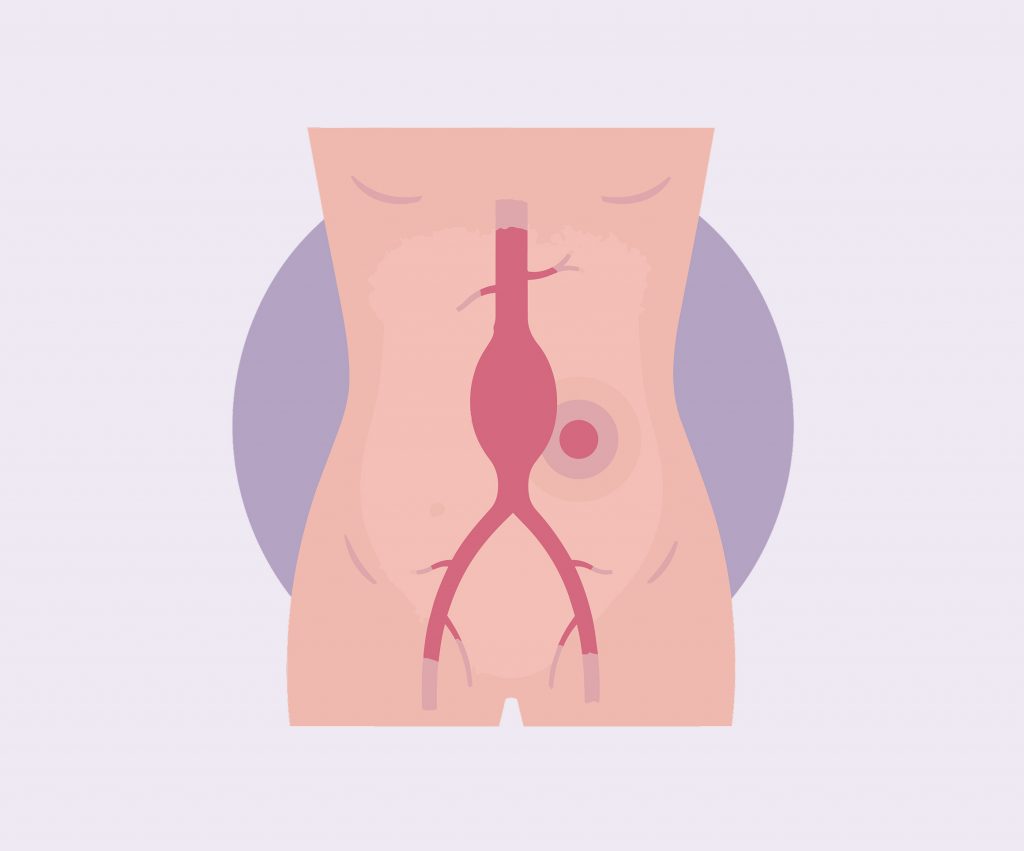
The aorta is the largest artery in the body and carries blood from the heart to the rest of the body.
An abdominal aortic aneurysm, or AAA, develops when a section of the aorta within the abdomen becomes enlarged. Many abdominal aortic aneurysms grow slowly and do not cause noticeable symptoms.
Because an aneurysm can become more concerning as it grows, identifying and monitoring an AAA can help determine when continued observation is appropriate and when treatment should be considered.
Abdominal aortic aneurysms can often be evaluated using vascular ultrasound.
Ultrasound is a noninvasive test that can measure the size of the aorta and help determine whether an aneurysm is present. When an aneurysm is already known, repeat imaging may be used to monitor changes in its size over time.
Additional imaging may be recommended depending on the size of the aneurysm, symptoms, and whether treatment planning is needed.
Treatment depends largely on the size of the aneurysm, how quickly it is changing, whether symptoms are present, and the patient’s overall health.
Smaller aneurysms may be monitored with periodic imaging while vascular risk factors are managed.
When an aneurysm reaches a size or condition associated with greater risk, repair may be recommended. Depending on the patient’s anatomy and medical needs, treatment may involve an endovascular procedure or open surgical repair.
Because many abdominal aortic aneurysms do not cause symptoms, screening may be appropriate for certain people based on age, smoking history, family history, and other vascular risk factors.
Patients with a known aneurysm should follow the monitoring schedule recommended by their healthcare provider.
Sudden, severe abdominal or back pain, fainting, weakness, or other symptoms concerning for a ruptured aneurysm require emergency medical attention.
An abdominal aortic aneurysm is an abnormal enlargement of the aorta within the abdomen. The aorta is the body’s largest artery and carries blood from the heart to other parts of the body.
Abdominal aortic aneurysms are associated with weakening of the aortic wall. Risk factors include older age, smoking, family history, and certain cardiovascular conditions.
Many abdominal aortic aneurysms cause no noticeable symptoms. Some patients may experience persistent abdominal or back pain or a pulsating sensation in the abdomen. Sudden severe pain or fainting may indicate an emergency.
Abdominal ultrasound is commonly used to detect and measure an aneurysm. Additional imaging, such as a CT scan, may be recommended when more detailed information is needed.
No. Smaller aneurysms may be monitored with regular imaging. Treatment decisions depend on the aneurysm’s size, growth, symptoms, anatomy, and the patient’s overall health.