
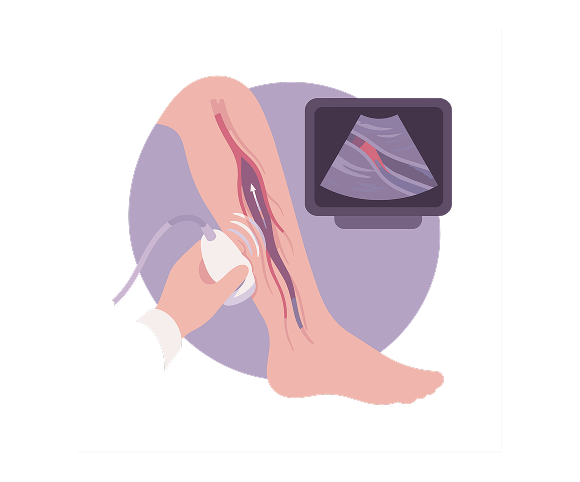
Vascular diagnostic testing provides information about how blood is moving through the arteries and veins.
Many vascular tests are noninvasive, meaning they can evaluate circulation without surgery or injections. Ultrasound uses sound waves to create images of blood vessels and measure blood flow.
These studies can help your vascular specialist identify circulation problems, determine their severity, and make informed decisions about monitoring or treatment.
The type of vascular study recommended depends on the symptoms or condition being evaluated.
Testing may include ultrasound imaging, Doppler evaluation, pressure measurements, or other noninvasive circulation studies. These tests can provide information about the direction and speed of blood flow and help identify narrowing, blockages, blood clots, or abnormal vein function.
Your vascular specialist reviews the results together with your symptoms, medical history, and physical examination.
Vascular testing itself is used to gather diagnostic information rather than treat a condition.
The results can help determine whether no immediate treatment is necessary, whether a condition should be monitored, or whether medical management or a vascular procedure should be considered.
If an abnormality is identified, your vascular specialist will explain the findings and discuss appropriate next steps based on your individual condition.
Vascular testing may be recommended when symptoms suggest a possible circulation problem or when a known vascular condition needs to be monitored.
Symptoms such as leg pain with walking, persistent swelling, slow-healing wounds, changes in skin color or temperature, or unexplained circulation concerns may warrant evaluation.
Testing may also be recommended based on certain medical conditions, vascular risk factors, or findings from a physical examination.
A vascular ultrasound is a noninvasive test that uses sound waves to create images of blood vessels and evaluate blood flow through the arteries or veins.
Vascular ultrasound is generally painless. A technologist places ultrasound gel on the skin and moves a small handheld device over the area being examined.
Depending on the study, testing may help identify narrowed or blocked arteries, blood clots, abnormal vein function, reduced circulation, or other vascular conditions.
The length of the exam depends on the type of study and the area being evaluated. Your care team can provide specific instructions when your test is scheduled.
The results are reviewed along with your symptoms and medical history. Your vascular specialist can then explain the findings and recommend monitoring, additional evaluation, or treatment when appropriate.