
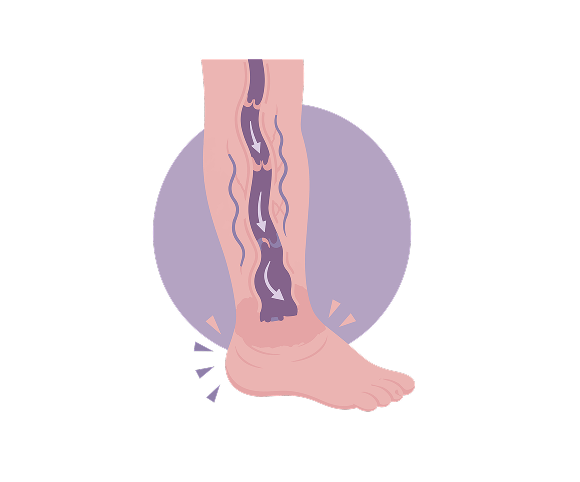
Chronic venous insufficiency develops when the veins in the legs have difficulty moving blood back toward the heart.
Healthy veins contain valves that help keep blood moving in the correct direction. When these valves become weakened or damaged, blood can move backward and collect in the legs. This increases pressure within the veins.
Over time, increased venous pressure can contribute to swelling, aching, heaviness, varicose veins, skin changes, and in more advanced cases, venous ulcers.
Evaluation begins with a review of your symptoms, medical history, and a physical examination of the legs.
Your vascular specialist may look for swelling, varicose veins, skin discoloration, wounds, and other signs of chronic venous disease.
A vascular ultrasound may be performed to evaluate blood flow and the function of the valves within the veins. The results can help determine where abnormal blood flow is occurring and guide treatment planning.
Treatment depends on the severity of venous insufficiency, your symptoms, ultrasound findings, and whether complications such as skin changes or wounds are present.
Conservative treatment may include regular activity, leg elevation, compression therapy, weight management, and other measures that help reduce swelling and improve symptoms.
When abnormal veins are contributing to significant symptoms or complications, minimally invasive vein procedures may be considered. Treatment is individualized based on the findings of your vascular evaluation.
Consider a vascular evaluation if you have persistent leg swelling, aching, heaviness, visible varicose veins, skin discoloration, or recurring discomfort in the legs.
Changes in the skin around the ankles or wounds that are difficult to heal may indicate more advanced venous disease and should be evaluated.
Sudden swelling, pain, warmth, or redness in one leg should receive prompt medical attention.
Venous insufficiency occurs when veins in the legs have difficulty returning blood toward the heart. Blood can collect in the legs and increase pressure within the veins.
Symptoms can include swelling, aching, heaviness, fatigue, varicose veins, itching, skin discoloration, and wounds around the lower legs or ankles.
Diagnosis usually includes a physical examination and may include vascular ultrasound to evaluate blood flow and the function of the valves inside the veins.
Yes. Long-term venous pressure can damage the skin and surrounding tissues and may contribute to wounds known as venous ulcers, particularly around the ankle.
Treatment can help manage symptoms and address abnormal vein function. Options depend on the severity of the condition and may include conservative care or minimally invasive vein procedures.